FDA orders an end to psychedelic research in the United States
How to Change Your MindThe Food and Drug Administration’s October 1966 order to stop psychedelic research in the United States turned a dispute over scientific legitimacy into an abrupt institutional rupture. Roughly sixty researchers received letters revoking approval for their work; nearly every American program then underway closed. The shutdown did not end all research—Spring Grove remained active for another decade—but it broke the continuity of sanctioned investigation and made the later revival a project of recovering and revalidating work that had been interrupted.
Causes and Background
By the mid-1960s, psychedelic therapy challenged the boundaries through which psychiatry defined legitimate treatment. Earlier accounts of these drugs as psychotomimetic, resembling psychosis, or psycholytic, loosening psychological defenses within talking therapy, could be fitted more readily into established medical frameworks. The newer psychedelic model proposed something more disruptive: a single high-dose session intended to produce a conversion-like experience, with the patient’s and therapist’s customary roles altered. Its spiritual dimensions, and its reliance on Set and setting, brought clinical practice close to forms of healing that many academic psychiatrists regarded as insufficiently scientific.
Professional resistance had become visible before the federal order. In 1963, Roy Grinker, editor of the Archives of General Psychiatry, criticized researchers who took the drugs themselves and, in his view, became enamored of mystical experience. The following year, he objected to investigators’ personal use in the Journal of the American Medical Association, while other critics complained that an aura of magic surrounded the drugs. At the same time, the rise of the double-blind, placebo-controlled trial as the standard for testing medicines made psychedelic studies especially vulnerable: participants and guides could often tell whether psilocybin had been administered, and researchers could not easily separate the drug’s effects from expectation, therapeutic attention, and the treatment environment.
The professional dispute was compounded by the growing difficulty of separating clinical research from illicit use in public and regulatory debate. In May 1966, the United States Senate held hearings on the LSD problem. Timothy Leary and Sidney Cohen defended research and tried to distinguish legitimate medical use from the black market. Senator Robert F. Kennedy challenged regulators over plans to cancel research projects and argued that banning medical use because of illicit use would cost the nation a potentially valuable treatment. His intervention did not change the outcome.
The Order and the Interrupted Session
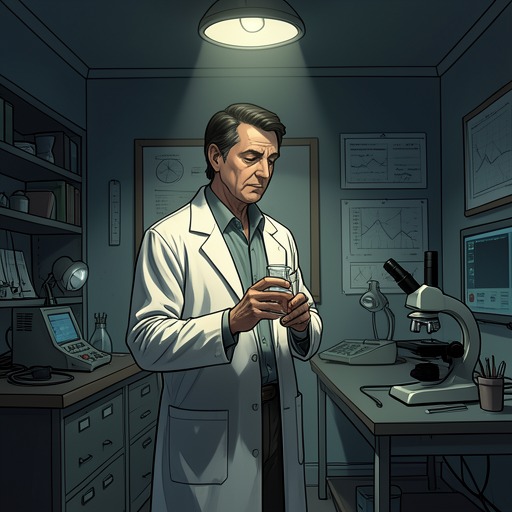
In October, the Food and Drug Administration sent letters to about sixty psychedelic researchers across the United States, ordering them to stop their work. The timing made the directive more than an administrative notice at the International Foundation for Advanced Study in Menlo Park. James Fadiman had just finished dosing four participants in a creativity and problem-solving experiment when the letter revoking approval arrived. The four men were already in the next room, beginning their session, as Fadiman read the order.
Fadiman and his colleagues postponed acting on the letter until the following day. That brief delay did not preserve the program: the International Foundation for Advanced Study’s research closed, along with virtually every other American program then underway. The episode condensed the shutdown into one stark contrast: four participants had just received a dose for a planned investigation of creative problem-solving, while the regulator’s decision made the continuation of that investigation impossible.
The Exception at Spring Grove
One major psychedelic program survived the closures: the Maryland Psychiatric Research Center at Spring Grove. Researchers there, including Stanislav Grof, Bill Richards, Richard Yensen, and Walter Pahnke, continued to study psilocybin and LSD. Their work examined treatment possibilities for alcoholism and schizophrenia, as well as the existential distress of cancer patients. Pahnke, the researcher associated with the Good Friday Experiment, remained at the center until his death in 1971; the program itself continued until 1976.
Why Spring Grove was allowed to persist while dozens of other projects were shut down remains uncertain. Some researchers who lost their programs speculated that the center had been providing psychedelic therapy to influential people in Washington, or that officials wanted to learn from the work or retain access to the drugs. Former staff members interviewed by the book’s narrator doubted those explanations. They confirmed instead that the center’s director, Albert Kurland, had a strong reputation among federal officials and extensive Washington connections. Those relationships helped keep the center operating and enabled it to obtain LSD, including some supplied by the government, for years after research elsewhere had been halted.
A Break in Research, and Its Legacy
The order left later investigators to resume a line of inquiry that had been dropped when sanctioned psychedelic therapy ended in the 1970s. When research returned, its advocates had to reconstruct earlier knowledge and repeat experiments under contemporary scientific standards. The regulatory and methodological difficulties had not disappeared: modern studies still faced problems with blinding, and the effects of a psychedelic session could not easily be separated from the setting, the therapists, or the participants’ expectations. The shutdown thus left a legacy not only of lost research time but also of an unresolved argument about what, exactly, a drug trial can isolate when treatment depends partly on the experience it creates.
The renewed clinical work eventually produced promising but still limited results. In the Johns Hopkins and New York University cancer studies, published together in 2016, roughly 80 percent of participants showed clinically significant reductions in anxiety and depression, effects that lasted at least six months. The trials involved only eighty subjects in total, and their findings required larger studies before they could support regulatory changes. A small feasibility study at Imperial College, directed by Robin Carhart-Harris in David Nutt’s lab, also reported rapid improvements among people with treatment-resistant depression, but it had no control group and was not randomized. Such findings made the interrupted research tradition newly consequential without establishing that its treatments were proven cures.
The shutdown therefore marks both a policy decision and a break in the production of medical knowledge. Its immediate force was practical: projects closed, researchers stopped, and only Spring Grove continued at scale. Its longer force was epistemic. When psychedelic therapy re-entered respectable clinical research, investigators had to confront the same boundary questions that had helped make the field controversial: whether its benefits could be evaluated through drug testing alone, how to account for therapeutic context, and how medicine should assess experiences described as spiritual.